The Language of Impasto
From Rembrandt to Vasquez — how thick, built-up paint creates a surface that exists in three dimensions.
By Fira Editorial
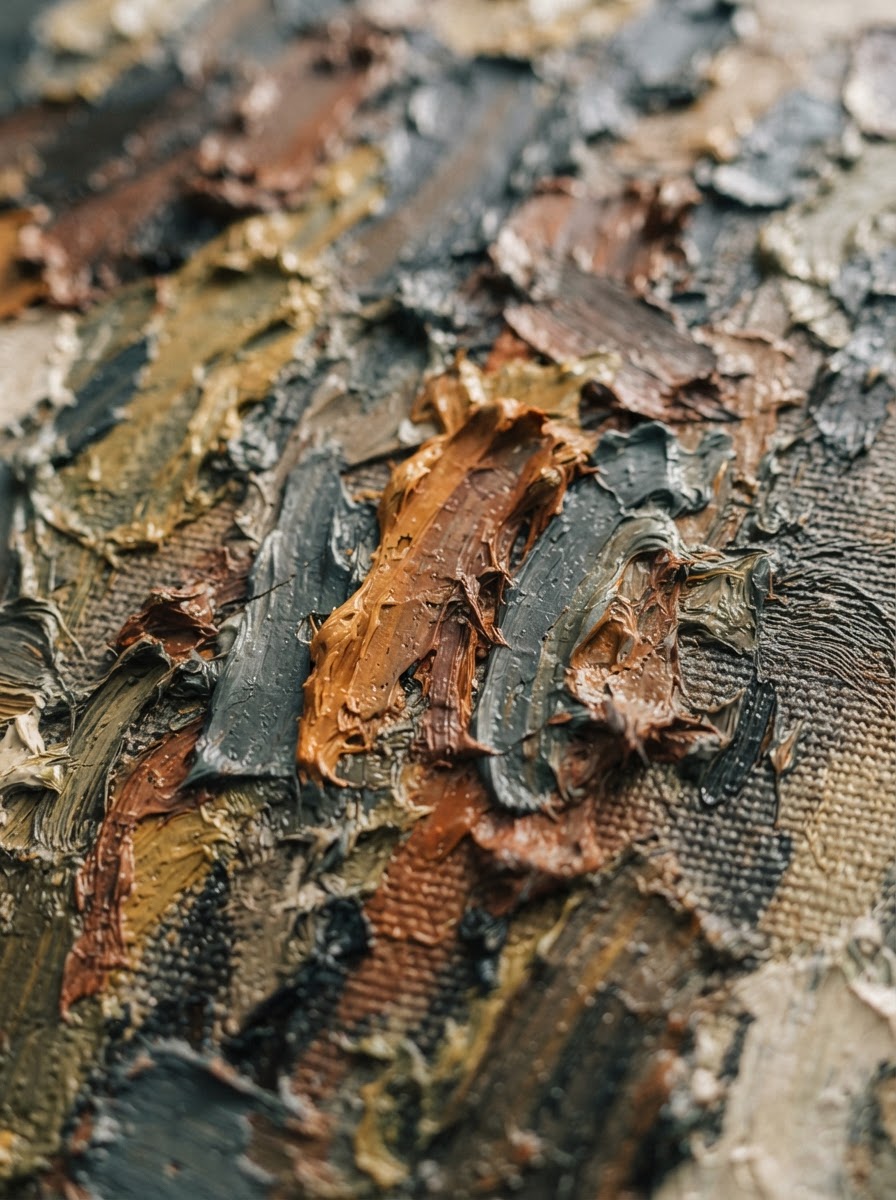
Impasto — from the Italian for 'dough' or 'paste' — is the technique of applying paint so thickly that the strokes stand out from the surface. It is not merely a stylistic choice; it is a structural one. The painting ceases to be a flat image and becomes a relief, a topography of pigment that casts its own shadows and catches its own light.
Rembrandt was among the first to use impasto not for decoration but for emotional truth. In his late self-portraits, the build-up of paint on the forehead and around the eyes becomes a literal record of age — the material itself enacting what the image depicts. The paint is not representing flesh; it has become flesh.
Elena Vasquez employs a related logic. Her canvases are built from layers of acrylic and oil, applied with palette knives and brushes and then partially scraped away. The result is a surface that records its own history — each layer visible as a stratum, like geological time compressed into a single plane.
What impasto offers, ultimately, is time. A smooth, flat surface can be taken in at a glance. A built surface demands duration. It rewards the viewer who lingers, who moves closer, who lets their eye trace the ridges and valleys of paint. In an age of instantaneous images, this is perhaps the most generous thing a painting can offer.
Continue Reading

