Conversations with Bronze
James Okonkwo on the dialogue between African sculptural traditions and European modernism.
By Fira Editorial
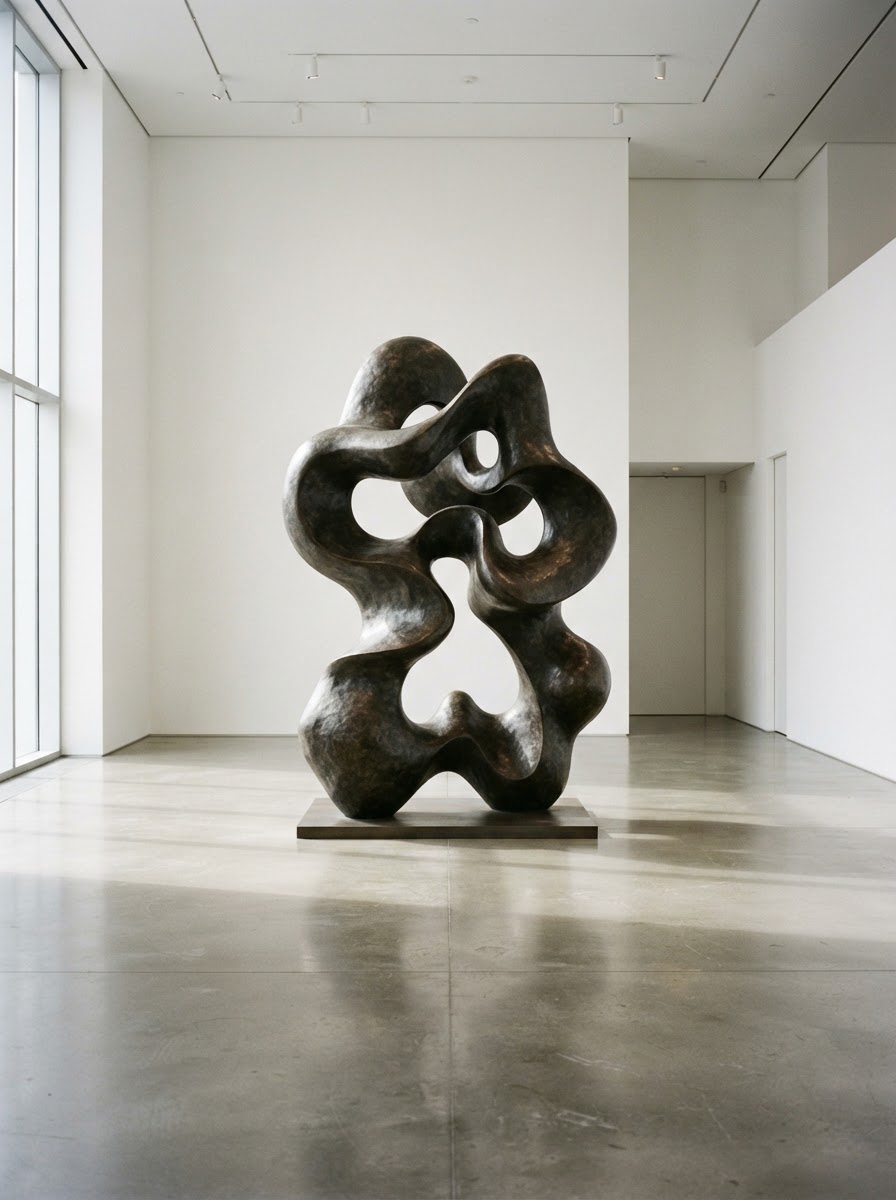
James Okonkwo's studio in Lagos smells of wax and patina. Bronze casts in various stages of completion occupy every surface — some polished to a mirror sheen, others left rough with the texture of their moulds still visible. The sculptor works between two traditions, and he resists the suggestion that they are in conflict.
'Bronze remembers,' he tells me, running his hand along the flank of a half-finished form. 'The metal has a memory. When I pour, I am not imposing my will on the material. I am entering a conversation that began long before me and will continue long after.'
Okonkwo trained at the Yaba College of Technology before moving to the Slade School of Fine Art in London. His work draws from the sculptural heritage of Benin and Ife — traditions that produced some of the finest metalwork in human history — while engaging in a contemporary dialogue about form, ancestry, and the movement of cultural objects across borders.
His sculpture Meridian, currently on view in the gallery, exemplifies this approach. The form suggests a figure in a state of becoming — not fully realized, but in the process of emerging. The surface is patinated to a deep, warm tone that catches light differently throughout the day, giving the work a quality of constant transformation.
'I want people to feel that the sculpture is alive,' he says. 'Not because it looks like something living, but because it changes. Because it responds. Bronze is not a dead material. It is in conversation with the air, with the light, with the people who move around it.'
Continue Reading

